Vehicle Safety Systems Every Fleet Should Consider

Fleetclear’s current solutions portfolio spans Cyclear, DVR, Reverse Radar, Tracking & Telematics, Anti-Roll & Driver ID, and Fleetclear Connect to name a few, which makes the topic highly relevant across multiple operating environments.
For fleet managers, transport leaders and health and safety teams, the key decision is rarely whether safety technology matters. It is deciding which vehicle safety systems will make the biggest difference in real operating conditions. That may involve improving blind spot awareness in urban areas, reducing reversing risk on mixed-use sites, protecting staff working around the rear of a vehicle, or using connected data to identify patterns before they lead to incidents.
HSE says workplace transport accidents frequently involve reversing vehicles and advises employers to keep vehicles and pedestrians apart where possible, reduce the need for reversing and improve visibility around vehicles.
A stronger approach is to move beyond standalone devices and think in terms of connected vehicle safety solutions. That means combining visibility, warning, prevention, evidence and operational insight in a way that reflects how the fleet actually works.
Why vehicle safety systems matter across every fleet
The operating environment changes from one sector to another, but the safety challenge is often similar. Vehicles move through busy spaces. Visibility is restricted. Drivers are balancing safety with productivity. In many fleets, operatives are also working outside the vehicle near traffic, plant or moving machinery.
This is why vehicle safety systems matter across sectors such as:
- Logistics, where dense urban routes and repeated manoeuvres increase exposure
- Construction, where mixed traffic and pedestrian movement create additional risk
- Local authority fleets, where vehicles operate in public spaces every day
- Waste and recycling, where the highest-risk area may be beside or behind the vehicle rather than in front of it
What good vehicle safety solutions should help fleets do
The right vehicle safety solutions should help fleets:
- Improve visibility around the vehicle
- Detect people, cyclists and objects earlier
- Provide timely warnings to drivers and operatives
- Reduce avoidable incidents
- Strengthen compliance and duty of care
- Provide reliable evidence after an event
- Reveal patterns across routes, vehicles and driver behaviour
Safety improves faster when managers can identify trends, repeated behaviours and recurring weak points, rather than only reviewing incidents after the fact. Fleetclear Connect is positioned specifically around bringing safety technology, tracking, telematics and video together in one platform to support that type of joined-up visibility.
1. Blind Spot Information System
Blind spots remain one of the most persistent safety issues for larger vehicles, especially in towns and cities where vulnerable road users are moving close to the vehicle.
A Blind Spot Information System should:
- Identify relevant collision risks accurately
- Provide clear visual and audible alerts
- Minimise unnecessary activations
- Adapt coverage to suit the vehicle and route profile
Fleetclear's Blind Spot Information System (BSIS) uses AI-powered passenger-side detection, in-cab visual and audible alerts, smart recognition filtering and configurable coverage zones. It is designed to improve awareness around the passenger-side blind spot without creating unnecessary distraction for the driver.
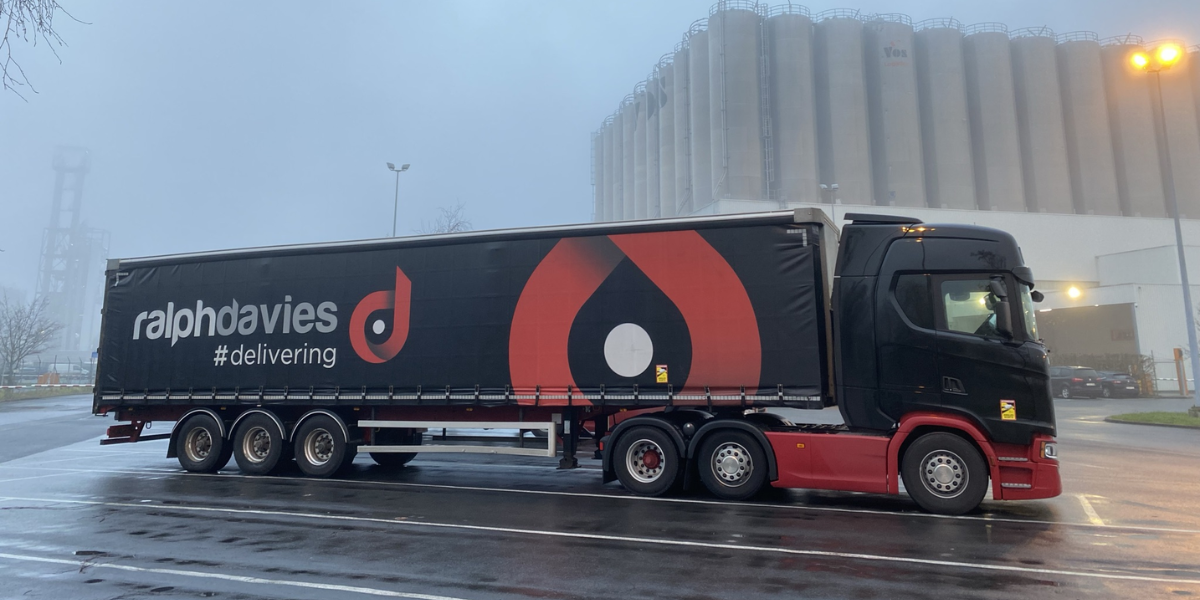
That is particularly relevant for fleets operating in dense urban environments. Our published customer stories include Ralph Davies’ London operation and Biffa’s DVS-related work, both of which reinforce the value of stronger vulnerable road user protection in higher-risk urban settings.
2. Cyclear AI
Cyclist warning technology adds another important layer of protection, particularly for fleets operating in public-facing environments where larger vehicles and cyclists regularly share road space.
Our Cyclear AI combines AI detection with an LED warning sign and an audible speaker to alert cyclists to potential hazards. It also highlights smart filtering to reduce irrelevant activations and integration with Fleetclear Connect to support route monitoring and optimisation.
Key features include:
- A two-part Prevent and Detect setup
- A high-visibility warning sign visible from over 30 metres
- Smart filtering to exclude street furniture and parked vehicles
- Integrated GPS that disables the warning system at higher speeds
3. Reverse Radar
Reversing remains one of the most risk-intensive manoeuvres in fleet operations. It combines limited visibility, time pressure and the possibility of sudden movement around the vehicle.
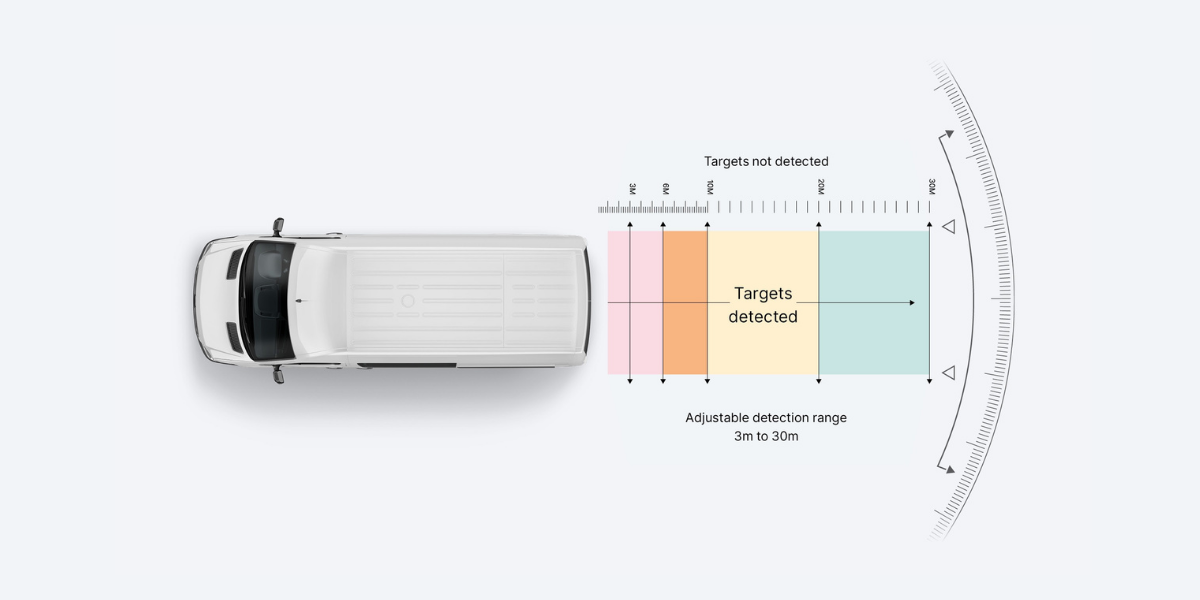
Our Reverse Radar is designed to monitor the rear blind spot during reversing manoeuvres. It can detect up to 16 stationary or moving targets simultaneously, uses 24GHz FMCW radar, provides a wide field of view, offers configurable detection zones and can include optional automatic braking when an object is detected within acritical distance.
Its value is especially clear in operations such as:
- Waste and recycling
- Local authority services
- Construction sites
- Depots and yards
- Urban delivery environments
4. DVR camera systems
DVR camera systems are often associated with incident evidence, but their operational value goes much further.
They help fleets:
- Review incidents accurately
- Resolve service complaints
- Challenge false claims
- Identify unsafe behaviour
- Understand what is really happening on the road and on site
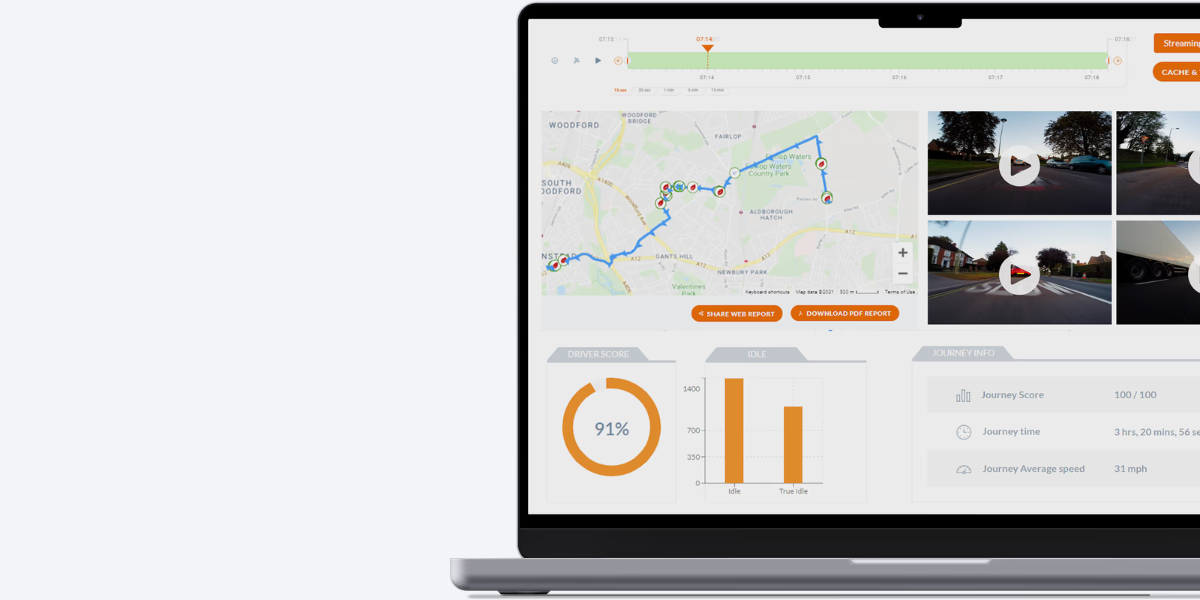
Fleetclear's DVR systems are tailored surveillance solutions for different vehicle types, helping organisations monitor driver behaviour, improve compliance with safety guidelines, reduce incident risk and provide evidence when incidents or disputes arise. 4G-enabled DVRs can also connect through Fleetclear Connect for live video management.
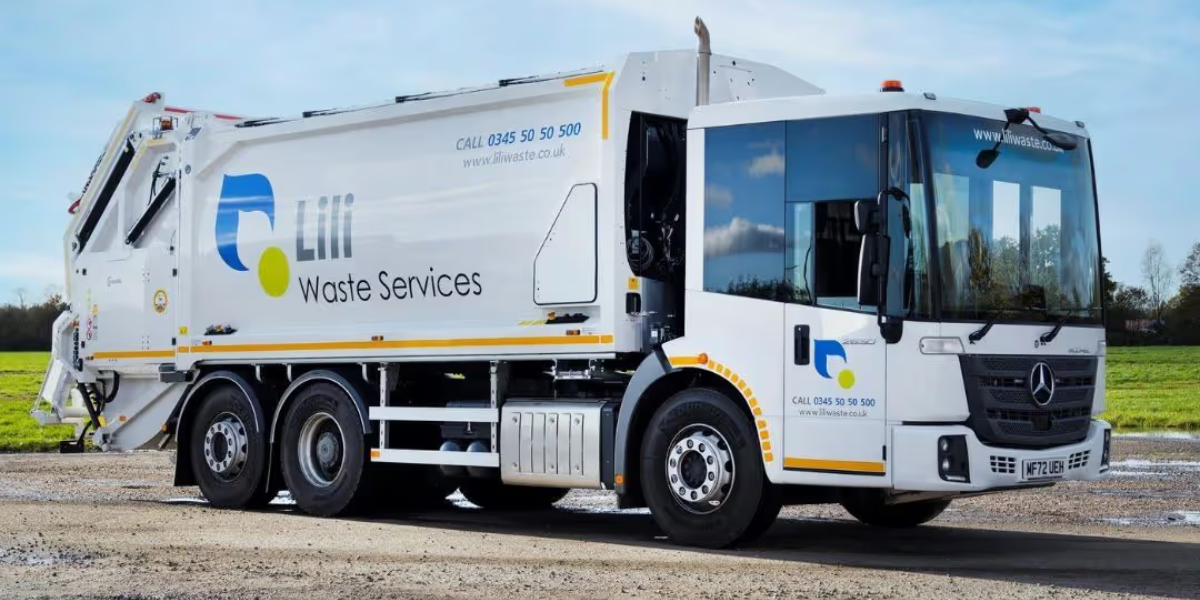
Lili Waste is a strong example of this in practice. Our customer story shows that says Lili Waste equipped its 5-star DVS-rated trade waste refuse fleet with Fleetclear DVR camera systems and switched to Fleetclear Connect to monitor and track vehicle safety technology, with the technology helping to exonerate drivers when needed.
5. Tracking and telematics
If DVR explains an individual event, tracking and telematics help explain the pattern behind it.
That broader visibility matters because safety issues are often linked to route conditions, operating hours, idling, utilisation or repeated driver events. Telematics helps fleet teams move from isolated observations to evidence-based management.
Our Tracking and Telematics solution includes:
- Real-time monitoring through Fleetclear Connect
- Driver behaviour monitoring and efficiency scoring
- Programmable audible warnings
- Data logging for up to 10 years
- Additional alarm input and third-party API integration
- Weighing integration
- GDPR-compliant remote connection
6. Anti-Rollaway and Driver ID
Some of the most serious fleet risks do not happen while the vehicle is travelling at speed. They happen when control is lost during stop-start operation, driver exit or unauthorised use.
Our Anti-Rollaway& Driver ID solution is designed to address both unintended movement and unauthorised operation. The system immobilises the vehicle when the driver exits the cab, blocks attempts to drive until the driver is identified and can issue internal and external verbal warnings. It can also apply the park brake automatically if the driver exits without applying it.
The system also includes:
- Anti-rollaway protection through automatic brake application
- RFID, keypad and covert actuator identification options
- Programmable audible warnings
- Black box recording for up to three years
- Vehicle monitoring and CANBUS safety checks
7. Specialist systems for higher-risk operations
Some operational risks are highly specific. General safety technology helps, but it does not always address the exact hazard around the vehicle. That is where specialist systems become especially valuable.
Vehicle Lift Information System (VLIS)
Our Vehicle Lift Information System is designed for waste and recycling operations where staff are working around vehicle bin lifts. Serious accidents can occur if someone enters the danger zone during automatic lift mode. VLIS uses AI detection to monitor that zone and immediately disables the lifting mechanism if a person or object is detected there.
The system also offers:
- Automatic prevention when a loader or vulnerable road user is detected
- AI filtering to reduce false activations
- Adjustable detection zones
- Event reconstruction when combined with Fleetclear Connect and Fleetclear DVR
Live Lane Information System (LLIS)
Live lane exposure is another example of a risk that affects operatives outside the vehicle as much as drivers inside it.
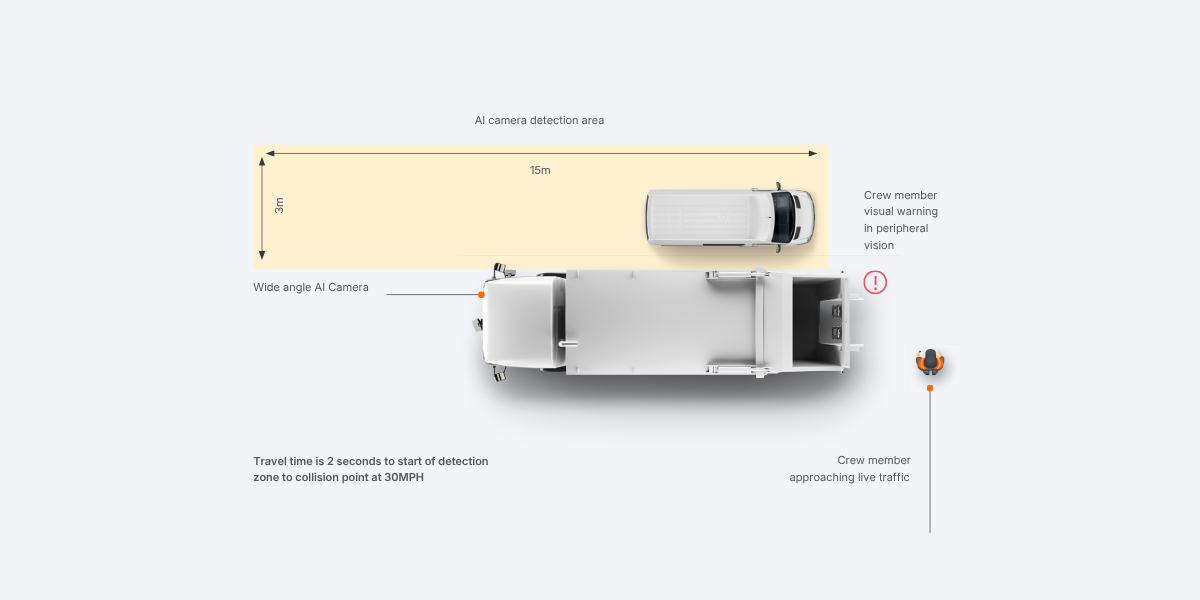
Fleetclear's Live Lane Information System is designed to warn operators working at the rear of the vehicle when an oncoming vehicle is approaching in the adjacent live lane. The diagram below, shows the camera detection area and notes that, at 30mph, there may be only two seconds from the start of the detection zone to the potential collision point.
Key features include:
- Long-range vehicle detection up to 30 metres
- Peripheral warning lights at the rear of the vehicle
- Smart filtering to exclude street furniture
- Configurable detection zones based on the operating scenario
Our waste-sector customer stories, including Lili Waste, Cambridgeshire, Highland-region waste coverage and several local authority deployments, support the relevance of more specialised safety systems in collection environments.
Why connected vehicle safety solutions are often more effective
Many fleets have multiple safety technologies in place. The difficulty is that they do not always work together.
When systems sit in separate platforms, fleets often end up with:
- Fragmented reporting
- Slower investigations
- Duplicated administration
- Poor visibility across vehicles and drivers
- Less confidence in decision-making
Fleetclear Connect is designed to bring vehicle safety technology, video, telematics and reporting together in one platform. The published product information highlights activity tracking, event reconstruction, driver behaviour visibility, live streaming, maintenance data, cloud video storage and third-party integration.
Matt Sharp, Waste Information Systems Officer, Preston City Council:
“We’ve been using Fleetclear for over 8 years now and we’ve always been impressed by their products, customer service and responsive aftersales support. The technicians are knowledgeable, useful, and accommodating. Nothing is too much trouble, and they always go the extra mile.”
Common mistakes fleets make
When reviewing vehicle safety systems, fleets often lose value in familiar ways. Common examples include:
- Choosing technology based only on minimum compliance requirements
- Focusing on drivers while overlooking operatives outside the cab
- Adding devices without a plan for integration
- Underestimating the importance of relevant, accurate alerts
- Failing to use video and telematics data for improvement
- Applying the same setup across very different vehicle types and operating environments
Final thought
The best vehicle safety systems are the ones that reflect the realities of the fleet.
For one operator, that may mean BSIS and Cyclear AI to strengthen protection for vulnerable road users.
For another, it may mean Reverse Radar and DVR to improve awareness and provide stronger evidence.
In higher-risk sectors such as waste and recycling, specialist systems like VLIS and LLIS may be essential. In many fleets, the greatest value comes when these technologies are brought together into connected vehicle safety solutions that support visibility, prevention, review and operational insight in one place.
Want to improve your operations? Contact us today to get a free demo of our solutions.
Drive your business forward with Fleetclear.
Contact our team to book a demo and start your journey towards a safer, more efficient and compliant fleet.